

 (310) 513-0618


Are American Cars Cheaper to Repair Than Japanese?
American car parts are usually cheaper and easier to find, but Japanese cars typically cost less to repair and maintain overall. The reason comes...

 Mon-Fri 8:00am – 5:00pm • Sat 8am – 12pm • Sun Closed
 731 Pacific Coast Hwy, Harbor City, CA 90710


Yes, you can register a Japanese car in California, but it must be at least 25 years old and pass strict CARB emissions rules. Registering a JDM (Japanese Domestic Market) car in California means clearing federal customs, meeting California Air Resources Board standards, and passing a CHP inspection. It’s the hardest state for this. Here’s the exact path I walk customers through.

Table of Contents
ToggleWant a written estimate?
Photos and technician notes before any work is approved. Call (310) 513-0618Since 1997, Blu Automotive Repair & Maintenance has served Harbor City as a trusted shop for Japanese auto repair. In that time, I’ve seen plenty of buyers fall in love with a Japanese car like the Skyline GT-R, Toyota Supra, or Honda NSX before checking the direct import requirements. California won’t title a car straight from Japanese paperwork in most cases.
This step-by-step guide walks you through it. You usually need an out-of-state title first, then full CARB compliance work, then registration.
Table of Contents
ToggleYes, but only if the car qualifies and clears California’s emissions process. A Japanese Domestic Market car must be 25 years old to enter the U.S. legally. Then California adds its own layer. From what I’ve observed firsthand, the emissions step is what catches most people off guard. It’s the single biggest cost and the longest delay in the whole process.
Blu Automotive Repair & Maintenance has served LA drivers since 1997 with ASE Certified Mechanics, AAA approval, and expert care for Toyota, Lexus, Honda, and all Asian makes & models. Every repair is backed by a 2-year / 24k-mile warranty.
Call Us Today!

A vehicle must be at least 25 years old from its manufacture date to be eligible for import and registration in the U.S. This bypasses Federal Motor Vehicle Safety Standards (FMVSS), enforced by the National Highway Traffic Safety Administration (NHTSA). You can check the exact build date using the car’s chassis number. I always tell buyers to confirm the month, not just the year. Knowing how to import a Japanese car to the USA before you buy can keep a few weeks’ shortfall from stalling the whole process.
Before the California DMV processes your registration, you must prove the car was imported legally. One mistake I often see is buyers losing or skipping a form. Keep every document. Here’s what you’ll need:
This is the hardest step. California requires all imported vehicles newer than 1975 to meet strict state emissions standards. The car must prove it meets EPA requirements for its model year and pass California emissions testing. After nearly 30 years working on Japanese car brands, I can tell you this is where reality sets in for most buyers. Here’s what it involves:
In my experience, the emissions bill surprises more buyers than any other part of the process. Budget for it before you fall in love with a car.
You must have the car’s Vehicle Identification Number physically verified. Schedule an appointment with your local California Highway Patrol to inspect the frame numbers and paperwork. I usually recommend doing this right after emissions clears, so nothing sits in limbo. Bring all your import documents to the appointment. Missing paperwork means a wasted trip.
Once you have your emissions compliance label and CHP clearance, visit your local DMV to finish registration. The state outlines its official process for how to register an imported vehicle. Bring the following:
Pro tip: Because of the cost and timeline of CARB testing, many buyers enlist specialized JDM importers to handle sourcing, shipping, and state legalization for them. I’ve found it saves a lot of stress for first-timers.
Once your vehicle registration is complete, you still need coverage before driving. Standard policies often struggle to value a direct import vehicle fairly. Many JDM owners use specialty or collector insurers who understand the market. I always advise shoppers to line up a quote early. Factoring the insurance fee into your budget keeps the final step from becoming a surprise.
When putting these options head-to-head, a few errors come up again and again. Here’s what to avoid:
I always advise buyers to double-check every requirement before sending money overseas. Import costs can also shift based on tariffs, shipping fees, and changing trade policies, which can significantly affect the total cost of bringing a JDM car into California. Long-term ownership costs matter too. If you’re comparing your options, it helps to understand whether American cars are cheaper to repair than Japanese before making your final decision.
The $3,000 rule for cars is California’s repair cost limit for vehicles that fail a Smog Check. If your car flunks its emissions test and the fix would cost more than the cap, you may qualify for a repair cost waiver through the state’s consumer assistance program.
One thing to note: it doesn’t usually apply to direct JDM imports, which follow the CARB direct-import path instead.
The JDM cars that are legal in California are those at least 25 years old that pass CARB compliance. Popular examples include the Nissan Skyline R32 and R33, the Toyota Supra MK4, and the Mazda RX-7 FD. Keep in mind that age alone won’t make a car street legal here. Each one still needs lab testing and a BAR Referee label, so emissions compliance is really the deciding factor.
Importing a car from Japan to California costs the vehicle price plus 15 to 25 percent in fees covering shipping, customs, and broker costs. Then add CARB compliance, which runs anywhere from $5,000 to $15,000.
Your realistic all-in budget depends heavily on the model. High-demand cars like a Skyline GT-R cost much more to bring into compliance.
Registering an imported car in California costs more than a standard registration because of the extra compliance steps. The DMV charges registration fees, vehicle license fees, and use tax, and on top of that sits the CARB emissions work, which is the largest expense. Since the lab and Referee fees are paid separately from DMV fees, you should plan for several thousand dollars beyond normal registration.
Registering a Japanese car in California is possible but demanding. The car must be 25 years old, clear federal customs, pass CARB emissions at a certified lab, get a BAR Referee label, pass a CHP VIN check, and finish at the DMV. The emissions step is the most expensive and time-consuming. Most buyers benefit from professional help on the compliance work.
If you’re planning to import or register a Japanese car in California, get the compliance details right before you buy. Call Blu Automotive Repair & Maintenance at (310) 513-0618 or stop by the shop in Harbor City. Serving Japanese car owners since 1997, we’ll walk you through the process and help you avoid costly mistakes.

Meet The Author:
Luis Imaicela
Luis Imaicela is the President of Blu Automotive Repair & Maintenance in Harbor City, CA. Having grown up in the family business founded in 1997, he now leads the shop with a strong focus on honesty, transparency, and high-quality repair work. Luis is dedicated to making the repair process less stressful by ensuring customers understand every step and feel confident in the care their vehicle receives.
American car parts are usually cheaper and easier to find, but Japanese cars typically cost less to repair and maintain overall. The reason comes...
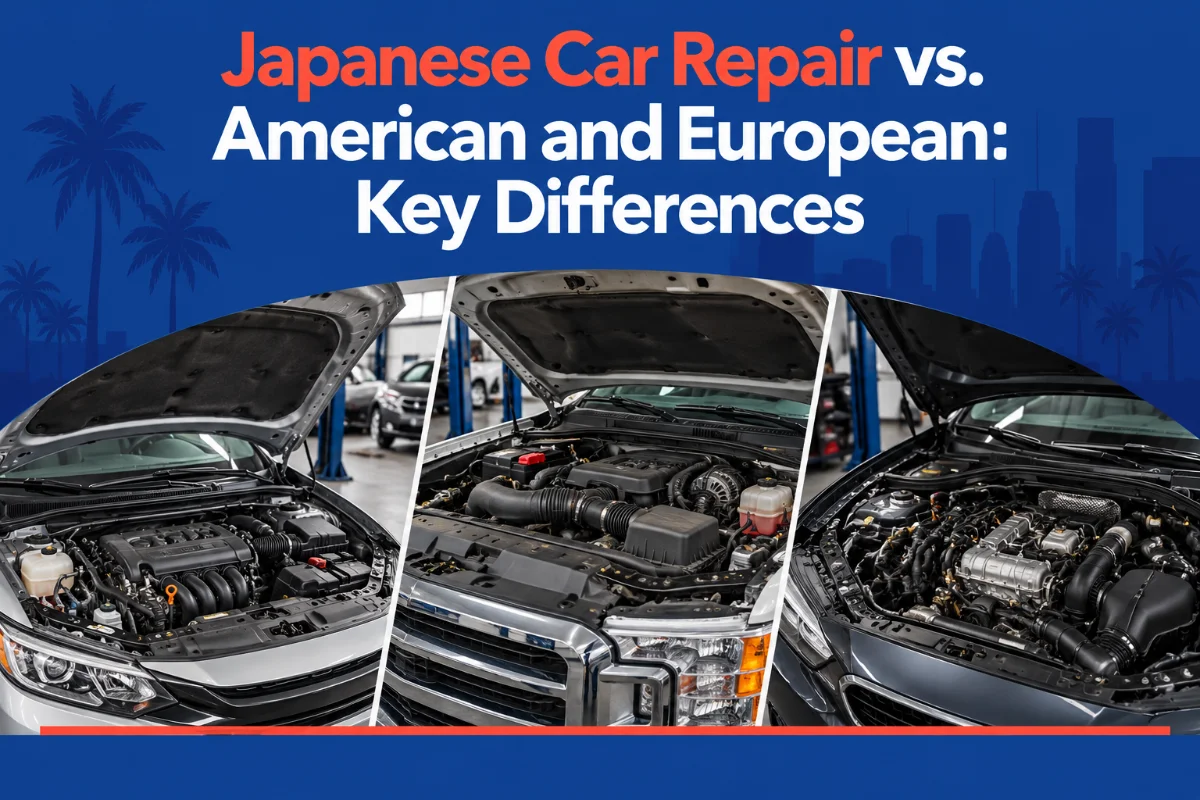
Japanese cars are easier and cheaper to repair than American and European cars, thanks to simpler engineering, wider parts availability, and shorter labor times.

Blu Automotive Repair & Maintenance is the best Japanese car repair shop in Harbor City, CA. ASE certified, AAA approved, with a 2-year /...
We use cookies to analyze our website traffic and measure our Facebook ads. You can manage your choices or opt out at any time.